

Have you ever felt like space flows like a softly glowing river? Picture a gentle stream carrying gas and twinkling stars, quietly guiding galaxies in a slow dance. These hidden channels steer energy and matter with a calm yet powerful force. They remind us that the vast universe is alive with motion and mystery.
In this article, we'll talk about how these radiant flows help shape galaxies and uncover secrets about the force behind their movement. Imagine it like watching the universe play a gentle tune under a night sky full of wonder.
Understanding the Science of Cosmic Streams
Cosmic streams are huge flows of matter winding their way through space. They carry gas and stars along paths shaped by a mysterious force called dark matter. Think of them as cosmic highways that guide energy and material across the vast, interconnected web of the universe.
Imagine a gentle river that brings life-giving water to dry lands. That’s a bit like these cosmic streams, moving energy and material from one part of the universe to another. Back in the 1970s, scientists used a clever method called the Zel'dovich approximation, a simple way to see how matter moves, to predict these flows.
There are two main types of cosmic streams. Stellar streams, like the Sagittarius stream spotted in 1994, are trails of stars ripped from smaller galaxies by gravity. They look like glowing trails across the night sky, reminding us of how powerful cosmic events leave lasting marks. Then there are gaseous streams, such as the Magellanic Stream observed in 1974, which stretch over a wide arc and contain vast amounts of neutral hydrogen. Picture these as glowing mists wandering through space, carrying the building blocks for new stars.
Cosmic streams are key players in the evolution of galaxies. They feed galaxies by bringing fresh gas needed to light up new stars. They also share angular momentum, which helps shape how galaxies spin and form structures like spiral arms. Just like a soft current that shapes the banks of a river, these streams guide the growth and change of galaxies over time. By studying them, scientists learn more about how our universe moves and evolves.
Observational Evidence of Cosmic Streams
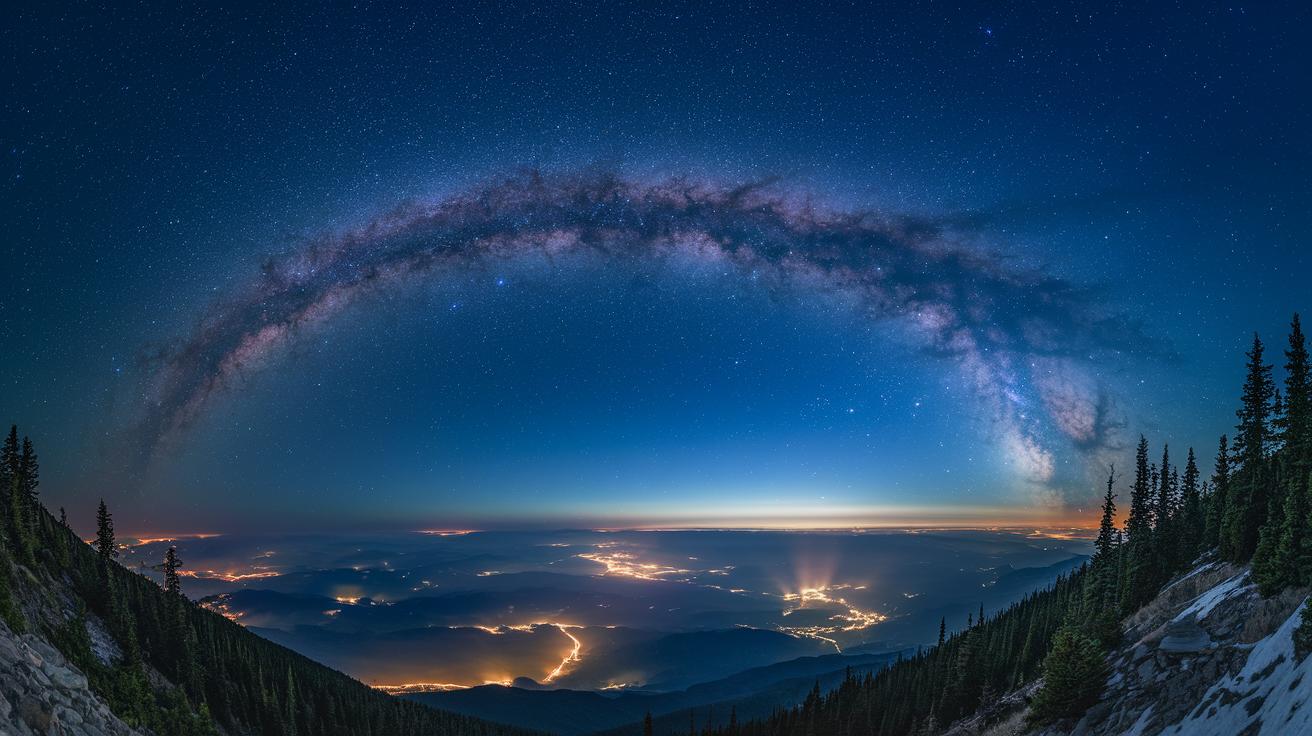
Advanced radio surveys and 21-cm observations have really opened our eyes to the gentle dance of gaseous streams. Astronomers tune in to the soft glow of neutral hydrogen (simply put, hydrogen atoms that aren’t charged) to see how these massive flows move. For instance, the Magellanic Stream shows speeds from –400 up to +100 km/s. It’s like following invisible highways carved by gravity, where the whisper of hydrogen tells a story of cosmic journeys.
Deep optical surveys teamed with Gaia’s precise measurements have revealed stellar streams stretching across our sky. By catching the faint light of stars that have drifted apart from their clusters, researchers discovered lovely features like the tidal tails of Palomar 5 and the sprawling Orphan Stream. Simulations like Illustris and EAGLE have painted similar pictures, helping us see how these streams shape the galaxies we admire. Together, these methods light up our path to understanding the radiant flow of matter in space.
| Stream Name | Type | Discovery Year | Extent on Sky |
|---|---|---|---|
| Magellanic Stream | Gaseous | 1974 | Over 100° |
| Palomar 5 Stream | Stellar | 2001 | 22° |
| Orphan Stream | Stellar | 2006 | Over 50° |
| Sagittarius Stream | Stellar | 1994 | Approximately 60° |
These approaches form a friendly toolkit that lets us explore how matter flows gracefully through the cosmos, guiding our understanding of the universe one starry whisper at a time.
Historical Development of Cosmic Stream Theory
Back in the 1970s, scientists started picturing our universe as a place where matter flows like a gentle river. They used a method called the Zel’dovich approximation, a simple way to imagine how gas and stars form strings that stretch across the cosmos. Think of it as watching starlight guide a hidden dance, where gravity and everyday matter team up to create delicate, glowing paths.
Then in 1996, everything got even more exciting. Bond, Kofman, and Pogosyan introduced a model that tied galaxies together with vast, almost invisible streams. Their idea was like discovering secret cosmic highways connecting massive clusters of stars and galaxies. This breakthrough reshaped how we see the universe, offering a fresh look at the seamless flow of cosmic matter.
By the early 2000s, new computer simulations, called N-body and hydrodynamic simulations, shone an even brighter light on these cosmic flows. With these tools, researchers could see the tiny details of how gas moves and feeds galaxies, almost like watching the universe breathe. This work helped us understand how galaxies stay lively and vibrant, fueled by the ceaseless stream of cosmic energy.
Metaphysical Interpretations of Cosmic Streams

Cosmic streams are seen as energy channels that connect us with a higher purpose. They bring a gentle pulse of cosmic energy into our lives, tuning our inner vibes with the vast universe. The book Streams of Consciousness talks about Twelve Hidden Frequencies that help guide this flow.
These subtle waves can boost your energy and deepen your link with a wiser, higher self. Simple practices like guided meditations (learn more here: what is cosmic guidance and how does it work) or keeping an Activations Journal let you tap into these radiant channels.
- Hindu nadis
- Chinese meridians
- Hermetic aetheric currents
- Kabbalistic flows
- Shamanic energy rivers
- Modern frequency models
Each of these traditions offers its own way to see how unseen energy moves within us. Think of the ancient idea of nadis in Hindu philosophy, energy flowing through you like a river, or modern views that describe these currents as soft, measurable waves. All of these ideas suggest that when we learn to feel these energies, our inner state shifts in wonderful ways.
These shifts can spark a sense of purpose and help you find a clearer path in life, much like the soft glow of the moon on a calm night. Ever felt how a quiet meditation session makes you feel in tune with the stars? It reminds you that you are part of a grand cosmic dance, guiding your days with a touch of mystery and wonder.
cosmic streams: radiant flow in space
Space and ground telescopes help us see the magical dance of the cosmos. Instruments like the JWST map bright strands of gas with a clarity that feels like catching the universe whispering secrets. And soon, the SKA surveys using a special radio wave (21-cm wavelength is just a fancy way to talk about a type of signal) will spot even fainter glimmers of hydrogen floating through space. Researchers use easy-to-access data portals like SDSS and follow COSMIC workflows, which are like windows into the lively parade of matter. Each new look helps us understand how gas and stars travel along invisible pathways.
Over on the computer side, simulation programs have become trusty sidekicks in studying these cosmic streams. Tools like IllustrisTNG and EAGLE create detailed models that mirror what we see twinkling in the night sky. These digital experiments let scientists check if their models match the real universe, which feels like a heart-to-heart chat with the cosmos. By mixing real telescope data with smart simulations, researchers paint a clearer picture of how everything flows. It’s a blend of high-tech gadgets and thoughtful computer work that makes the intricate patterns of the stars feel both accessible and inspiring.
Implications and Future Directions for Cosmic Streams Research

The Euclid mission, launching in 2023, is set to reveal dark matter filaments with an accuracy so precise it's almost like the universe whispering its secrets. Think of it as watching the cosmos sketch out its hidden blueprints right before our eyes. And then, by 2027, the Square Kilometre Array will be picking up the faint hum of hydrogen from far-off regions, adding even more color to our understanding of these celestial flows.
AI is about to add another layer of wonder by uncovering secret patterns hidden in mountains of data. With machine learning woven into simulation tools, we can now peek into the history of how gas gathered around galaxies, almost like reading the universe's own diary. It feels as if AI is translating scattered starlight into a clear, captivating story of cosmic journeys. This mix of innovative computation and smart observations is opening up fresh paths for exploring the delightful mysteries of cosmic streams.
Final Words
In the action of cosmic streams, we saw how the flow of matter and energy shapes both galaxies and our inner sense of self. We've touched on their scientific essence, the art of charting starry paths, and the metaphysical whispers that invite us to tune in.
Every facet, from massive space mapping to the subtle hints of energy, leaves us empowered to embrace celestial guidance and look forward with hope and wonder.
FAQ
What is Cosmic Streams Spotify?
Cosmic Streams Spotify often refers to a curated playlist that embraces celestial-themed music, offering soothing tracks designed to elevate your mood and connect you with the energy of the stars.
What does a Cosmic Streams review focus on?
A Cosmic Streams review focuses on the overall experience, discussing how the playlist or content captures cosmic inspiration through its ambiance, music selection, and alignment with celestial themes.
What are cosmic streams in astrophysics?
Cosmic streams are large flows of stars, gas, and matter shaped by the pull of dark matter. They help form the structure of the universe and influence how galaxies evolve over time.
How do scientists observe cosmic streams?
Scientists observe cosmic streams using radio surveys, optical imaging, and data from missions like Gaia. These techniques capture patterns in both gaseous and stellar streams, deepening our grasp of the cosmos.
What significance do cosmic streams have for galaxy formation?
Cosmic streams contribute to galaxy formation by channeling matter along dark matter filaments. This process aids in building galaxies and guides the transfer of angular momentum within them.
How has the theory of cosmic streams developed over time?
The theory of cosmic streams has grown from early ideas using the Zel’dovich approximation to today’s sophisticated simulations and AI analyses that reveal details about gas flows and galaxy evolution.
Can cosmic streams have metaphysical meanings?
Some interpretations view cosmic streams as energy channels that align with personal growth. These ideas inspire meditation practices aimed at tuning into universal energies that spark inner reflection.