

Ever feel like those far-off stars might be whispering secrets to you? Imagine a message written long ago, carrying clues from a distant cosmic event. These soft signals, little bursts of energetic particles (tiny packets of cosmic power) and gentle ripples, tell a story of great star explosions and massive celestial collisions. In this article, we explore how these hints light up our understanding of space, inviting you to view the universe as a kind storyteller sharing its most enchanting tales.
Fundamentals of Cosmic Messengers in Astrophysics
Cosmic messengers are like secret letters from events happening far outside our solar system. They carry clues from huge, explosive moments in space. Imagine getting a handwritten note sent millions of years ago by a distant star, it sparks a sense of wonder and curiosity about the universe. These tiny signals let us piece together the grand story of cosmic light and energy.
There are three main types of cosmic messengers: cosmic rays, neutrinos, and gravitational waves. Cosmic rays are high-energy particles that fly through space, pointing us back to their powerful origins. Neutrinos are almost weightless and zoom near the speed of light, slipping through almost everything, which makes them super hard to catch but really important. Gravitational waves, on the other hand, are like gentle ripples in the fabric of space-time that carry soft hints about major events in the cosmos.
Scientists study these messages to learn about amazing events like exploding stars and colliding black holes. By capturing these fleeting signals, researchers can build a clearer picture of how stars are born, live, and fade away, as well as how dramatic cosmic events shape the universe. It is a fascinating journey, turning distant, energetic moments into real stories that feel both familiar and extraordinary.
Cosmic Rays as High-Energy Messengers Across the Universe
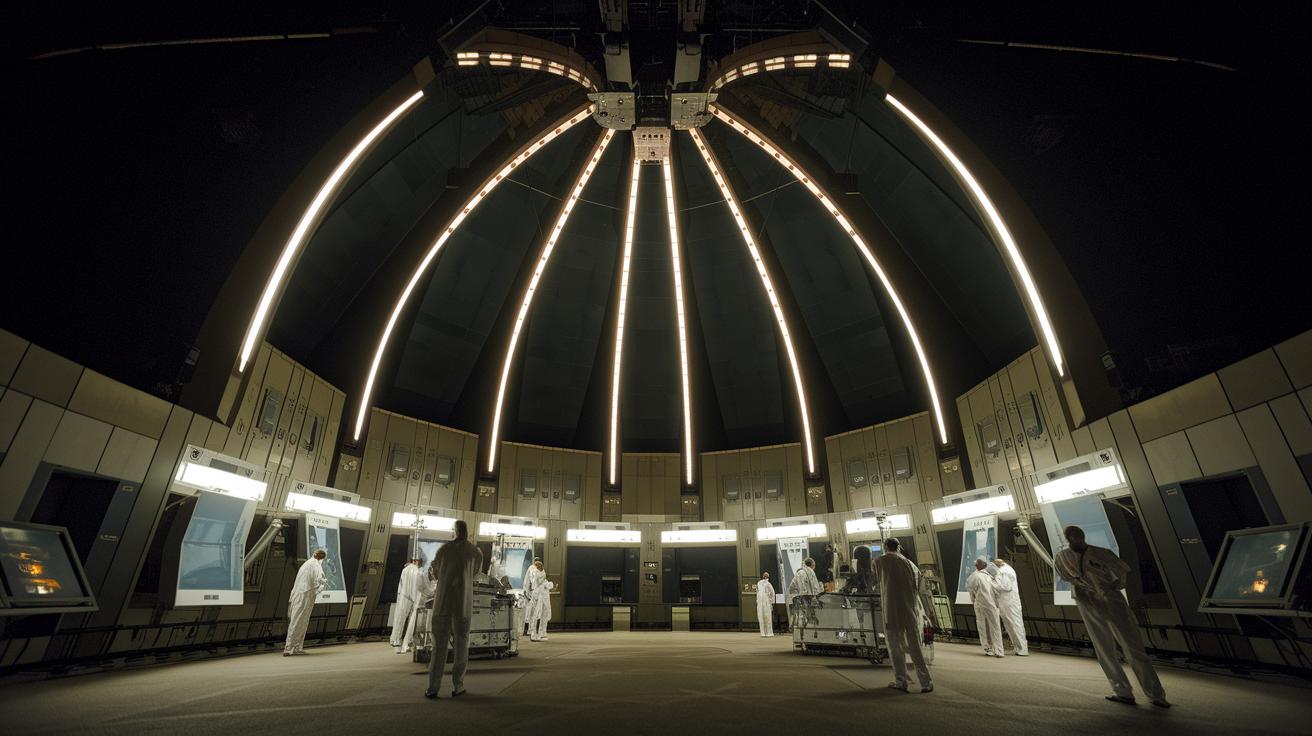
Cosmic rays are super energetic particles that race across space at incredible speeds. They come from explosive events like dying stars or busy galaxy centers. Some carry as much energy as 10^20 electronvolts, which is truly mind-blowing. Imagine the gentle glow of starlight mixed with the wild power of a supernova, that's the kind of energy we're talking about.
Scientists capture these cosmic travelers using different tools:
- Ground-based air-shower arrays
- Imaging atmospheric Cherenkov telescopes
- Balloon-borne particle detectors
- Satellite-based instruments (like AMS)
- Radio-antenna cosmic-ray arrays
These clever methods let researchers catch the particles as they interact with Earth’s atmosphere or fly in space. Each tool picks up its own little details, helping scientists trace the rays back to their fiery origins. Together, they reveal the massive events shaping our understanding of the universe, one cosmic secret at a time.
Neutrino Astronomy: Detecting Nearly Invisible Galactic Signals
Neutrinos are tiny particles that zip along near the speed of light, like soft whispers drifting across the night sky. Because they barely have any mass, catching them is a real challenge, almost like trying to hold onto a wisp of starlight. So scientists build observatories deep underground, where the rock shields the detectors from pesky extra radiation. This safe, hidden spot lets researchers listen carefully to the gentle messages coming from the heart of the Sun, sudden supernova explosions, and other bright, distant events.
| Detector | Location | Observed Neutrino Sources |
|---|---|---|
| Super-Kamiokande | Japan | Solar and atmospheric |
| IceCube | Antarctica | Extragalactic, cosmic |
| SNO+ | Canada | Solar and supernova |
Every neutrino that gets recorded acts like a tiny messenger, sharing secrets about the inner workings of stars and the grand explosions of supernovae. These gentle hints help scientists better understand how energy and matter play together under extreme conditions. Over time, catching many of these elusive particles builds a clearer picture of the cosmic dance lighting up our galaxy and beyond. Underground observatories, like silent guardians, continue to capture fleeting sparks from the vast darkness, reminding us of the endless wonder the universe holds.
Cosmic Messengers: Stellar Science Ignites Curiosity

Einstein's famous theory showed us that big, speeding objects can send little ripples through space and time. These ripples, which scientists call gravitational waves, are like gentle whispers from the cosmos, hinting at powerful forces at work far beyond our Earth. Their predicted existence pushed researchers to build super-sensitive tools that could catch these faint trembling echoes from colossal cosmic crashes. Imagine the universe speaking in soft vibrations, its message woven right into the fabric of space.
The first clear signals came from observatories called LIGO and Virgo. They picked up the low hum of black holes and neutron stars colliding. Even though these dramatic events are rare, the waves they send travel across the entire universe, showing us real evidence of huge cosmic impacts. Picture two black holes clashing and sending a deep vibration through space, a vivid confirmation that Einstein's ideas were truly on track.
By studying these gravitational waves, scientists learn a lot about how space and time dance together. They piece together clues about when and where these massive events happened and how intense they were. In short, these delicate ripples help us glimpse the hidden rhythm of the cosmos, carrying secret messages from the universe’s most dramatic moments.
Advanced Detection Techniques for Tracing Cosmic Messengers
We now have improved systems and integrated networks that let us track cosmic messengers in fresh, exciting ways. Space tools now join forces with ground setups, offering clear benefits when watching cosmic happenings.
Cosmic Ray Detection Technologies
Ground arrays and Cherenkov telescopes still capture those dazzling particle cascades, while space instruments pick up signals without any of the hazy interference from our atmosphere. It's a bit like watching stars wink in a dark, quiet orchard.
Neutrino Observatory Designs
Deep underground, detectors using water, ice, or heavy water continue to sense the faint whispers of nearly weightless particles. Imagine stepping into a cool cavern where gentle signals share their hidden secrets with attentive sensors.
Gravitational Wave Interferometers
Laser setups with cryogenic supports and real-time data checks now spot the tiny ripples in space-time. Think of it as catching the soft echo of a distant drumbeat, gently vibrating through the cosmos.
By mixing these varied methods, we get a stronger, more updated way to explore the heavens, highlighting the exciting improvements in space-based over ground-based tech.
Significance and Breakthroughs in Cosmic Messenger Research

Since a few surprising detections changed the way we see the cosmos, astrophysics has entered an exciting, new chapter filled with wonder. In 2015, LIGO, a special tool that picks up ripples in space from massive events, captured gravitational waves from black-hole collisions, as if the universe was softly speaking its secrets. A little earlier, in 2013, IceCube caught the first high-energy neutrino signals, giving us a rare glimpse into the powerful energy bursts from exploding stars. Meanwhile, observatories on Earth have been busy mapping ultra-high-energy cosmic rays, building a solid base for discoveries that keep challenging our cosmic maps.
These groundbreaking finds have reshaped our ideas and models of how the universe works. Scientists now mix real cosmic messenger data into their computer simulations to better capture the drama of huge stellar events. With clearer signals from neutrinos and gravitational waves, these models now reveal finer details of how stars burst and merge, much like watching the intricate dance of celestial bodies. New, more precise instruments have also sparked a surge of fresh theories that match what we see in the night sky, nudging us to think about cosmic events in entirely new ways.
Looking to the future, research promises to be even more dazzling. Thanks to better detection gadgets and ever-improving techniques, scientists are stretching their tools to catch even the faintest whispers from the depths of space. Studies that blend signals from neutrinos, cosmic rays, and gravitational waves are set to uncover hidden details of explosive cosmic events. These anticipated breakthroughs are sure to spark innovative simulation models and bring us closer to understanding the universe’s most dramatic and heart-stirring moments.
Final Words
In the action, we explored cosmic messengers by shedding light on high-energy particles, near-invisible neutrinos, and space-time ripples. We broke down the science behind these messengers, shared how advanced tools capture their signals, and revealed how key discoveries shape our view of the cosmos.
Each segment showed us how cosmic insight guides our daily lives. May these findings spark clarity, inspire wonder, and encourage a positive outlook as you embrace the universe's gentle hints.
FAQ
What are cosmic messengers and what do they represent?
The cosmic messengers signify carriers of information from distant cosmic events. They include cosmic rays, neutrinos, and gravitational waves that reveal secrets about explosions and black-hole collisions.
What is the cosmic messengers pdf?
The cosmic messengers pdf compiles key details on high-energy particles, neutrinos, and gravitational waves. It outlines their properties, detection techniques, and role in exploring astrophysical phenomena.
Who is the drummer in cosmic messenger?
The cosmic messenger doesn’t include an actual drummer. This term is likely a creative metaphor rather than a scientific role in astrophysics.
What is the study of cosmic?
The study of cosmic events focuses on astrophysics, examining particles and signals like cosmic rays, neutrinos, and gravitational waves to learn more about distant phenomena and space-time dynamics.