

Have you ever considered that tiny space rocks might hide clues about our solar system’s early days? Asteroids, simple bits left over from the universe’s first moments, are like little records of cosmic history. They take us back to a time when gas and dust swirled together to form our bright sun.
Today, let's explore what asteroids really mean and why these space fragments can ignite a fresh sense of wonder about our cosmic beginnings.
asteroid meaning: Spark Your Cosmic Curiosity
Asteroids are tiny, quiet space rocks that circle our Sun. People call them space rocks because they are leftovers from the time when our solar system was just beginning to form. They are like pieces of a cosmic puzzle that give us clues about the universe’s early days.
NASA explains that asteroids are bits of rocky material remaining from the early cloud of gas and dust that created our Sun. Unlike planets, these space rocks are much smaller and don’t have an atmosphere, making them truly one-of-a-kind.
These objects come in all sorts of sizes, from rock fragments about 10 meters big to huge ones several hundred kilometers wide. Imagine each asteroid as a tiny record of very ancient times, holding secrets of a violent, formative past. Studying them can spark your curiosity about the origins of everything around you.
So next time you think of the stars, remember these cosmic relics. They’re nature’s little time capsules, inviting you to explore the mysteries of the universe and to keep asking questions about where it all began. Stay curious.
Asteroid Origins in the Early Solar System
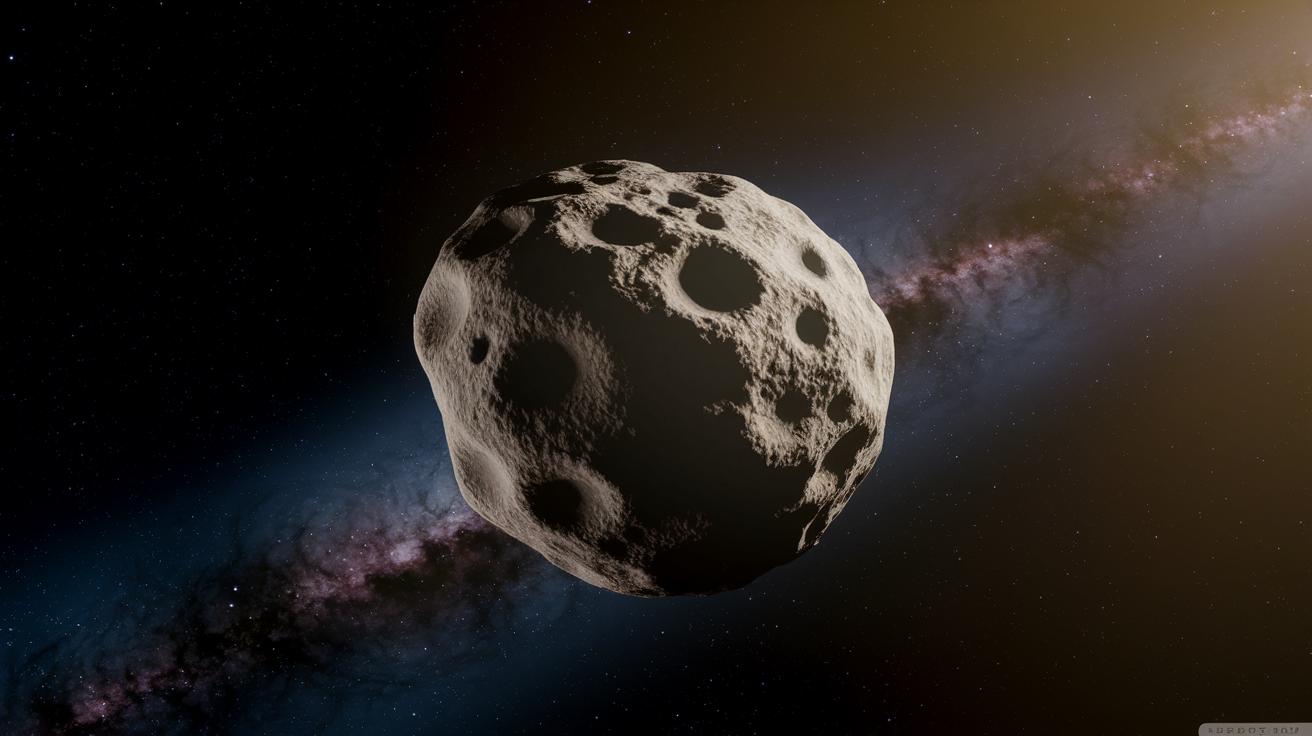
Asteroids sprang to life nearly 4.6 billion years ago when a huge cloud of gas and dust collapsed to form our bright Sun. In that bustling time, leftover bits in the protoplanetary disk didn't join together into a full-sized planet. Each space rock holds its own mix of elements, shaped by its spot in the ancient solar nebula (a swirling mix of gas and dust). Studying these little travelers is like unwrapping a secret note from the dawn of our solar system.
Scientists have been drawn to these ancient messengers for as long as we can remember. They see that the forces which built our solar system were wild and ever-changing. Some fragments stayed frozen in time, keeping hints of planetary birth from before Earth even existed. By comparing different asteroids, they notice that the story each rock tells can change depending on how close it was to the early Sun and what fiery collisions it endured.
This journey into the past shows us that asteroids are more than just space rocks; they're keepers of cosmic history. Each one is like a page in our solar system’s diary, inviting us to read about the conditions that shaped our celestial neighborhood. Isn't it amazing to think that these ancient bodies still whisper secrets about the early, dynamic days of our cosmic home?
Asteroid Composition and Physical Characteristics
Asteroids are like the relics of the early solar system, each one sharing a quiet secret of how things began. They come in different kinds. There's C-type, made with carbon-rich materials; S-type, mostly built from silicate rock; and M-type, packed with metal. Think of C-types as having a darker, mysterious feel, while S-types catch the light a bit more.
These space rocks rarely look smooth or round. Instead, they often have weird, bumpy shapes with craters from countless cosmic crashes over billions of years. Imagine a rock that’s been hit and reshaped time after time, it might feel light and airy in parts or super solid, depending on its density. This tells us if it’s like a heap of dust or a tightly packed stone.
Scientists study these asteroids with a method called reflectance spectroscopy. It’s a bit like checking the colors of a painting to see what’s really there. A shiny spot might hint at metal or crystals, while a deep, dark tone could point to ancient organic compounds. This simple check helps us learn more about the secrets each asteroid holds, adding little pieces to the big puzzle of our cosmic history.
Asteroid Belts and Orbital Fragments
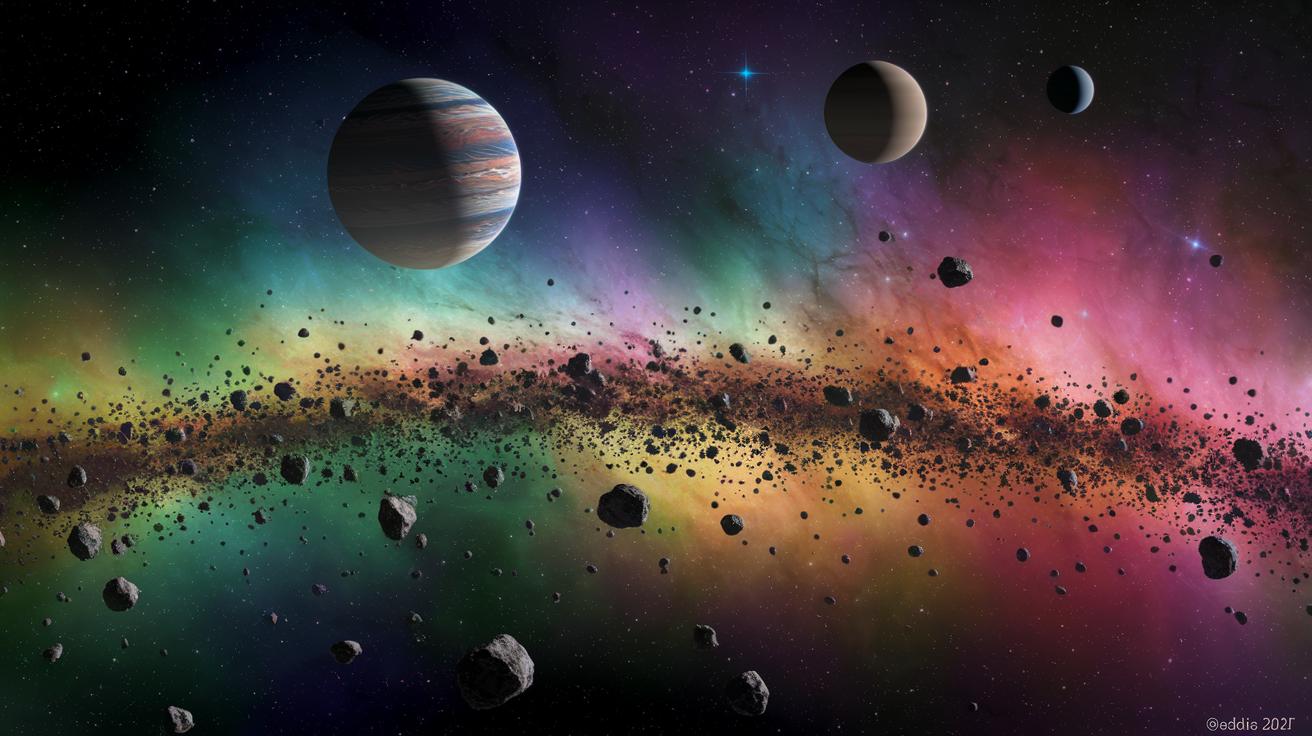
The main asteroid belt sits between Mars and Jupiter. It is a busy cosmic neighborhood filled with hundreds of thousands of rocky pieces. These objects travel on paths defined by their semimajor axis (a key measure of their orbit), eccentricity (how stretched the orbit is), and inclination (the tilt of the orbit). Think of it like a school bus full of kids; each on a different path but sharing the same ride.
Other groups of space rocks add to our solar system's colorful view. Near-Earth asteroids, or NEAs, drift closer to our home planet. Jupiter Trojans follow right along with Jupiter, either ahead or behind it. And then there are Centaurs, icy wanderers that roam the far regions. Each group has its own tale of how it formed and moved over time.
Jupiter’s gravity is a major force in this cosmic dance. Its strong pull clears gaps in the asteroid belt known as Kirkwood gaps. These gaps form because of gravitational resonances (subtle forces that gently nudge objects in their orbits). Picture a cosmic pinball game where these nudges lead to collisions, shift fragments, and sometimes even form new groups of asteroids.
Imagine the belt as the solar system’s own neighborhood with clear borders. Its design shows that even in the vast darkness of space, the combined pull of gravity and steady motion creates a lively, ever-changing community of small rocks.
Asteroid Impacts and Earth Interactions
You know, space rocks sometimes wander into our neighborhood and leave their mark on Earth. Big asteroids, those that can really shake up the ground, are thought to hit about once every century. Meanwhile, smaller rocks, around a meter in size, streak through our skies almost every month, mostly burning up in a dazzling flash.
Every day, roughly 100 tons of cosmic material, tiny dust, pebbles, or little fragments, drift down to our planet. Most of these bits fade away as they travel through our atmosphere, but a few manage to survive as meteorites, like little messages dropped by the universe. Ever imagine a meteorite landing near you, sparking a sense of wonder, as if nature itself had left a handwritten note at your doorstep?
For decades, scientists have kept a close watch on these space visitors. They use Earth-based telescopes to follow their paths and collect countless data points to sketch out each object's orbit. This steady tracking helps them know which ones might wander a bit too close for comfort and which are just harmless passersby.
NASA’s DART mission even experimented with nudging an asteroid off its course. It’s a clear sign that we're gearing up with clever strategies to handle potential space hazards.
| Event | Frequency/Impact |
|---|---|
| Large asteroids | About once a century |
| Small space bits | Monthly; usually burn up |
| Cosmic material | 100 tons per day |
And here's an interesting twist: only around 40 percent of asteroids larger than 140 meters have been spotted so far. That’s why keeping our eyes on the sky is key to staying safe amid the wonders of the cosmos.
Asteroid Research: Tracking and Mission Insights
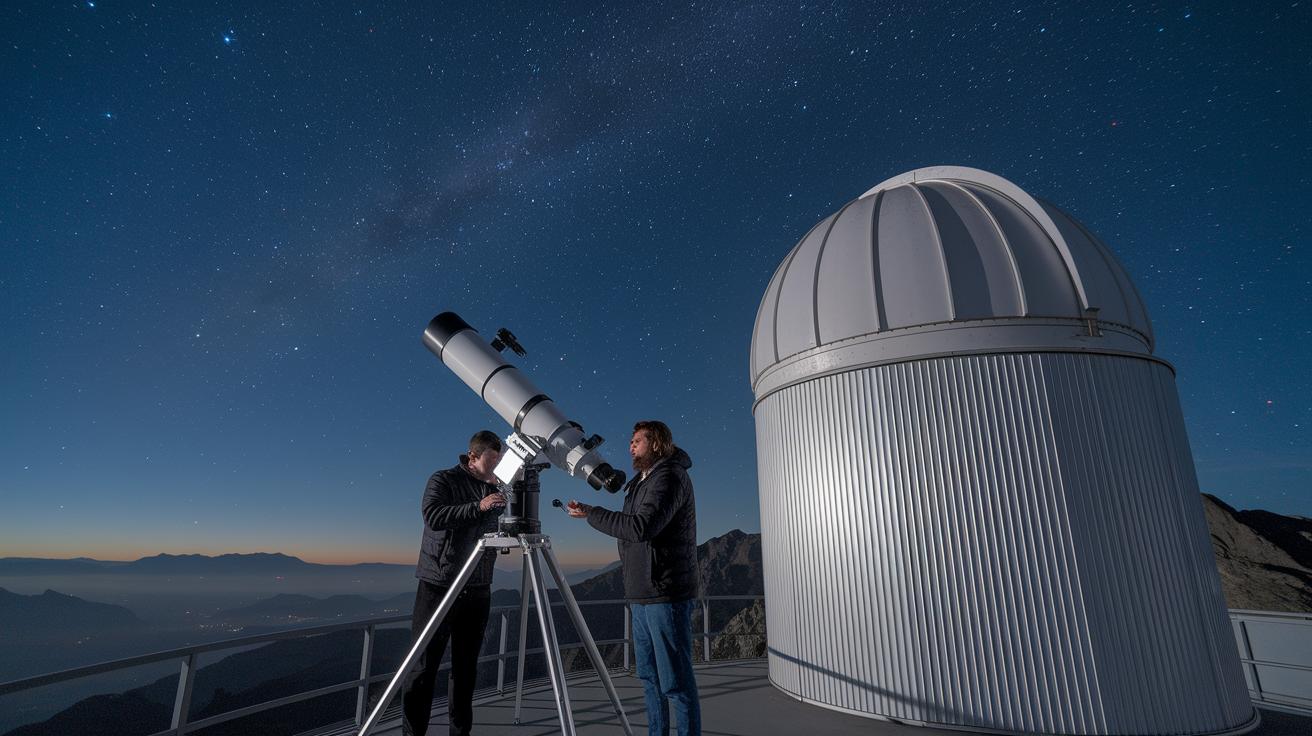
Astronomers use our ground-based telescopes to capture hundreds or even thousands of snapshots of asteroid positions, painting a picture of their journeys through space. This careful tracking helps us understand how these rocky travelers move and whether they might pose any risks. For example, when a potentially hazardous asteroid , an asteroid over 140 meters in size that could cross Earth's orbit , is spotted, scientists gather all the details about its size and path, much like snapping a quick close-up of a moving object.
Missions like OSIRIS-REx and DART bring these cosmic mysteries closer to home. OSIRIS-REx set out to collect a tiny sample from an asteroid, showing us firsthand what these ancient space rocks are made of. Meanwhile, DART is testing ways to nudge an asteroid off course, giving us a peek into methods that might one day protect our planet. And then, ongoing surveys such as LINEAR and Pan-STARRS keep on discovering new minor objects and tracking how brightly they shine. Absolute magnitude, which is a simple measure to estimate an asteroid's size, plays a central role in these observations.
Together, all these efforts are like piecing together a celestial detective story, where each new measurement reveals a bit more of the cosmic mystery. Every observation strengthens our understanding of these ancient, rocky fragments, helping us appreciate their place in the great dance of our universe.
Final Words
In the action of our cosmic exploration, we've traced the asteroid meaning from its core features to its role in our solar system. We saw how these rocky fragments formed from the birth of our Sun and discovered clues hidden in their build and orbits. We even touched on Earth’s encounters with these space rocks, showing us how science tracks and learns from them. Every piece of insight reminds us that these small celestial objects carry big stories, inviting us to see our place in the stars with renewed wonder.
FAQ
What are the meanings of “asteroid” in Hindi and Urdu?
The term “asteroid” in both Hindi and Urdu refers to a small, rocky body orbiting the Sun, a leftover fragment from the early solar system that never became a full planet.
What are asteroids made of?
Asteroids are made of rock, metal, and carbon-rich compounds. They include varieties like carbon-rich (C-type), silicate-rich (S-type), and metal-rich (M-type), each reflecting distinct conditions during the solar system’s early days.
What is the asteroid belt?
The asteroid belt is a region between Mars and Jupiter filled with rocky objects that orbit the Sun. Their paths are shaped by gravitational forces, notably from Jupiter, creating gaps and groupings among them.
How large can asteroids be?
Asteroids vary greatly in size. Some are tiny, about 10 meters across, while others span several hundred kilometers, showcasing the wide range of these cosmic bodies in our solar system.
Can you provide an example of an asteroid?
Vesta is a well-known example of an asteroid. It orbits in the asteroid belt between Mars and Jupiter and offers valuable insights into the materials and conditions from early solar system times.
What are some interesting facts about asteroids?
Asteroids are ancient remnants from the solar system’s formation. Often irregular in shape and cratered, they occasionally pass close to Earth and help scientists understand the materials that once built our planets.
How are asteroids named?
Asteroids are named following guidelines set by astronomers. Many receive names from mythology, historical figures, or the discoverers, linking cultural heritage with celestial observations.
What is the simple definition of an asteroid?
An asteroid is defined as a small, rocky object that orbits the Sun. These bodies are remnants from the early days of our solar system and lack an atmosphere or active geology.
What are the three main types of asteroids?
The three main types of asteroids are carbon-rich (C-type), stony or silicate-rich (S-type), and metal-rich (M-type). Each type exhibits unique compositions and clues about different areas of the early solar system.
What does an asteroid symbolize?
An asteroid symbolizes an untouched relic of the solar system’s past. It stands as a reminder of the early cosmic conditions and the basic building blocks that eventually formed the planets.
What is the difference between an asteroid and a comet?
An asteroid is a rocky, airless object made mostly of metal and minerals, whereas a comet contains a mix of ice, dust, and rock that forms a glowing tail when heated near the Sun.
hello world
hello world
creon cost uk
creon cost uk
loperamide cvs
loperamide cvs
dapoxetine hcl 20mg
dapoxetine hcl 20mg
semaglutide
semaglutide
doxycycline mono 100 used for
doxycycline mono 100 used for
metronidazole and wine reddit
metronidazole and wine reddit
cialis benefits reddit
cialis benefits reddit
generic liraglutide vs wegovy
generic liraglutide vs wegovy
toradol pain onset
toradol pain onset
ivermectin treatment FAQ
ivermectin treatment FAQ
ivermectin scabies findings
ivermectin scabies findings
minoxidil quick help
minoxidil quick help
minoxidil regrowth timeline
minoxidil regrowth timeline
medical review transparency
medical review transparency
Visit OnsetWithAlcohol.com
Visit OnsetWithAlcohol.com
tadalafil for ED explained
tadalafil for ED explained