

Ever feel like one spark can light up all the energy around you? Long ago, stories spoke of a cosmic man whose very nature built everything we know. His tale reminds us that the same spark flows within every part of our lives, linking us to the vast sky above.
This gentle symbol shows us that each piece of the world reflects the other. Have you ever felt life as one big, connected creation? Keep reading and see how these old ideas still warm our hearts today.
Origins and Symbolism of the Cosmic Man Archetype
The cosmic man stands for all the energy in the universe. In ancient texts like the Rig Veda Purusha Sukta, Purusha is described as a very first being whose body makes up everything. This isn’t just a myth, but a symbol that tells us nature is one big family. Ever wonder how every little part of our world can come from the same source? It’s as if each slice of Purusha matches the elements that build our world, sparking the kind of celestial wonder that makes you pause and smile.
Other old writings, like the Gnostic texts, introduce Adam Kadmon as a blueprint for creation. He is shown as a model of divine perfection, almost like a perfect design for life. And then, there’s the Norse story of Ymir, a giant whose body parts, when separated, gave birth to earth, sea, and sky. The Greeks had a similar idea with Anthropos, a figure linking the small details of our lives with the vast cosmos. These stories remind us that the image of the cosmic man not only mirrors our world but also lays down the foundation for all that exists.
The symbols in these tales are rich and layered. Ymir’s dismemberment isn’t just about making the world; it also shows that breaking apart something vast can bring unity in a new way. In Purusha’s story, every form of life is held within him, a gentle reminder that we are all part of the same universal dance. And the idea of Anthropos bridges our inner world with the outer universe, inviting us to see that what we feel and what we experience are closely tied together. These ancient narratives invite us to see our own lives in a new light, wrapped in the mysteries of the stars.
Esoteric and Philosophical Themes of the Cosmic Man
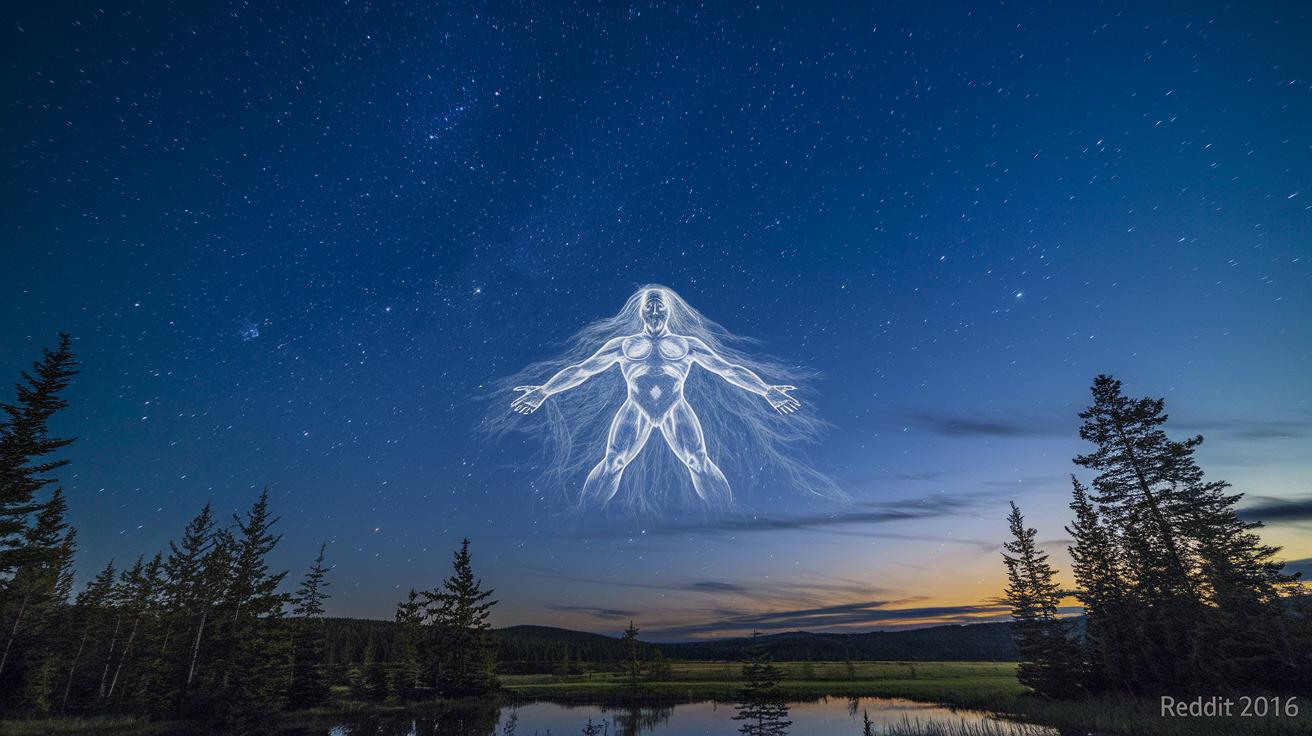
In Vedanta, we see a beautiful dance between Purusha (cosmic man) and Prakriti (the natural world) that shows how the spark of cosmic consciousness meets everyday life. Ancient Eastern texts share these ideas much like a gentle story, and they remind us of Gnostic philosophy where the cosmic man takes a spiritual journey through the Pleroma (a realm of fullness that holds deep meaning). Western thinkers, like those in Theosophy, also see the cosmic man as a universal mind that links our individual souls to a higher, all-embracing force. It is like gazing into a mirror that shows not just our reflection but a vast, mysterious order connecting it all.
Modern views add a fresh layer to this timeless tale. Jungian psychology, for example, treats the cosmic man as a symbol of our inner Self, guiding us through the process of becoming who we truly are. Metaphysical explorers see this figure as a reminder that our inner world is naturally woven into the fabric of the universe. In truth, these ideas invite us to see life as a rich blend of our physical existence and our spiritual journey.
Cosmic Man Sparks Celestial Inspiration
Ancient cultures often saw cosmic man as a symbol that beats in tune with the universe. In stories like the Mayan Popol Vuh, a figure called Heart of Heaven guides fate as if the stars themselves whispered secrets to us. It’s a reminder that nature and humanity share one glowing energy, echoing softly across time and space.
Taoist ideas, where yin and yang come together, show us how this cosmic figure balances different forces with gentle precision. Indigenous Australian Dreamtime myths also paint pictures of wise ancestors shaping the land and guiding social customs. It’s like life moves in balanced rhythms, inviting us to nurture harmony and feel hope spark in our hearts.
Modern festivals catch that same ancient vibe. Events like Burning Man turn ordinary spaces into lively worlds of art and creativity. They mix old legends with new adventures, letting each person take part in a universal journey of art, ritual, and joyful transformation.
Literary and Narrative Interpretations of the Cosmic Man

Eastern writings paint a picture of a perfect man, known as Al-Insān al-Kāmil, who shines with divine qualities. In these stories, like those found in Sufi texts, simple images and metaphors invite you to picture a man whose every breath links heaven and earth, a reminder that we are all part of a larger cosmic dance.
Western texts take a different yet equally enchanting approach. Biblical accounts speak of the "image of God" to show a cosmic man connecting creator and creation. Meanwhile, ancient writings like the Hermetic Corpus offer the idea of "As Above, So Below" to suggest that the stars themselves write our story. Even modern fantasy, such as C.S. Lewis’s space series, uses cosmic figures to explore moral questions and inner strength in a way that feels both accessible and deeply stirring.
Through these varied narratives, hidden meanings gently emerge. They wrap profound truths in clear, everyday language so that each of us can see a little of our own story in the vast, poetic tapestry of the universe.
Cosmic Man on Screen: The 1959 Film Adaptation
Cosmic Man is a quirky film from the late 50s that brings the idea of a space traveler to pop culture life. In this playful take, John Carradine stars as a kind alien who arrives in Bear Lake canyon, appearing as a floating white orb. The movie’s look is a real treat with a UFO that reminds you of a ping-pong ball and a retro mountain lodge vibe that instantly sets the tone for a unique and thoughtful story.
Plot Overview
The film centers on a lively debate between science and security. Dr. Karl Sorenson (Bruce Bennett) believes the alien visitor is a force for good, while the military views this cosmic guest with suspicion and fear. As the story unfolds, clever props and striking imagery invite us to wonder if humanity might embrace the unknown instead of always defending against it. The rural backdrop adds a touch of isolation where the mystery of the visitor gently challenges our usual ideas about alien encounters.
Cultural Impact
Nestled between early sci-fi gems like The Thing from Another World and It Came from Outer Space, this film carved out its own special space in movie history. Its retro style and mix of gentle wonder with moments of tension have sparked interest among cult film fans, even if it only received a modest two-star rating. People appreciate its honest attempt to blend cosmic wonder with the reality of military caution, making it a memorable chapter in vintage science fiction.
| Aspect | Detail |
|---|---|
| Director | Herbert L. Greene |
| Year | 1959 |
| Lead Actor | John Carradine |
| Main Theme | Benevolent extraterrestrial vs military fear |
Modern Reinterpretations and Fan Perspectives on the Cosmic Man

There are so many fresh takes on the cosmic man all over the internet. Fans on sites like Reddit and other fandom boards chat about his symbolic role and moral vibes in comics and movies. One popular idea even hints that the cosmic man might be similar to big modern figures like Marvel's Eternity or The Living Tribunal, a bit like comparing legendary heroes in a new light. Imagine lively panel discussions where fans show off art of the cosmic man, surrounded by swirling galaxies that look almost alive. These vivid images spark fun and thoughtful talks.
Creative retellings keep reshaping the cosmic man through storytelling across different media. Graphic novels and animated shorts now portray him as a kind of moral guide who transcends everyday limits. These art pieces blend classic symbols with modern ideas, inviting us all to see him in a fresh, new way. Lively voices in online communities continuously add their own insights and keep the conversation buzzing. Every piece of fan art and every animated story offers a unique take, mixing bright visuals with deeper meaning. In truth, the cosmic man remains a vibrant thread in our modern tapestry of myth.
Final Words
In the action, we witnessed a rich peek into how the cosmic man archetype links our inner self to the stars. We touched on early origin stories, symbolism, and thought-provoking esoteric themes.
The exploration weaved mythical narratives, cinematic highlights, and modern interpretations that shape our understanding of the cosmic man in everyday life. Each celestial insight brings hope and a fresh spark to embrace personal growth with a smile.
FAQ
Q: What is the meaning of cosmic man?
A: The cosmic man signifies a mythic figure representing the whole universe. It reflects ideas from texts like the Rig Veda where Purusha embodies creation and the unity between human life and the cosmos.
Q: What is the cosmic man movie?
A: The cosmic man movie refers to the 1959 film featuring John Carradine as a peaceful extraterrestrial whose calm presence sparks both wonder and military alarm in a distinctive vintage sci‐fi setting.
Q: Who is the cosmic man in Hinduism?
A: In Hinduism, the cosmic man is often linked to Purusha from the Rig Veda. His form symbolizes a primordial being whose body creates the universe, uniting cosmic forces and human existence.
Q: How does the cosmic man appear in DC and Marvel comics?
A: In comic lore, the cosmic man appears as a heroic archetype in both DC and Marvel. He represents vast cosmic forces, bridging terrestrial heroes with an expansive, mysterious universe.
Q: What is a cosmic person spiritually?
A: A cosmic person spiritually embodies an inner reflection of the universe. This symbol suggests a harmony between one’s inner essence and the broad expanse of the cosmos, inspiring self-insight.
Q: Who comprises the cast of the Cosmic Man film?
A: The Cosmic Man film casts include John Carradine as the enigmatic alien and Bruce Bennett as Dr. Karl Sorenson, offering a unique blend of sci‐fi intrigue and period cinematic style.
Q: How do vintage sci‐fi films relate to cosmic themes?
A: Titles like First Man into Space, Stranger from Venus, Journey to the Center of the Earth, The Brain from Planet Arous, Spaceways, and Destination Moon evoke cosmic exploration and mysterious encounters, enriching the classic narrative of space and cosmic wonder.