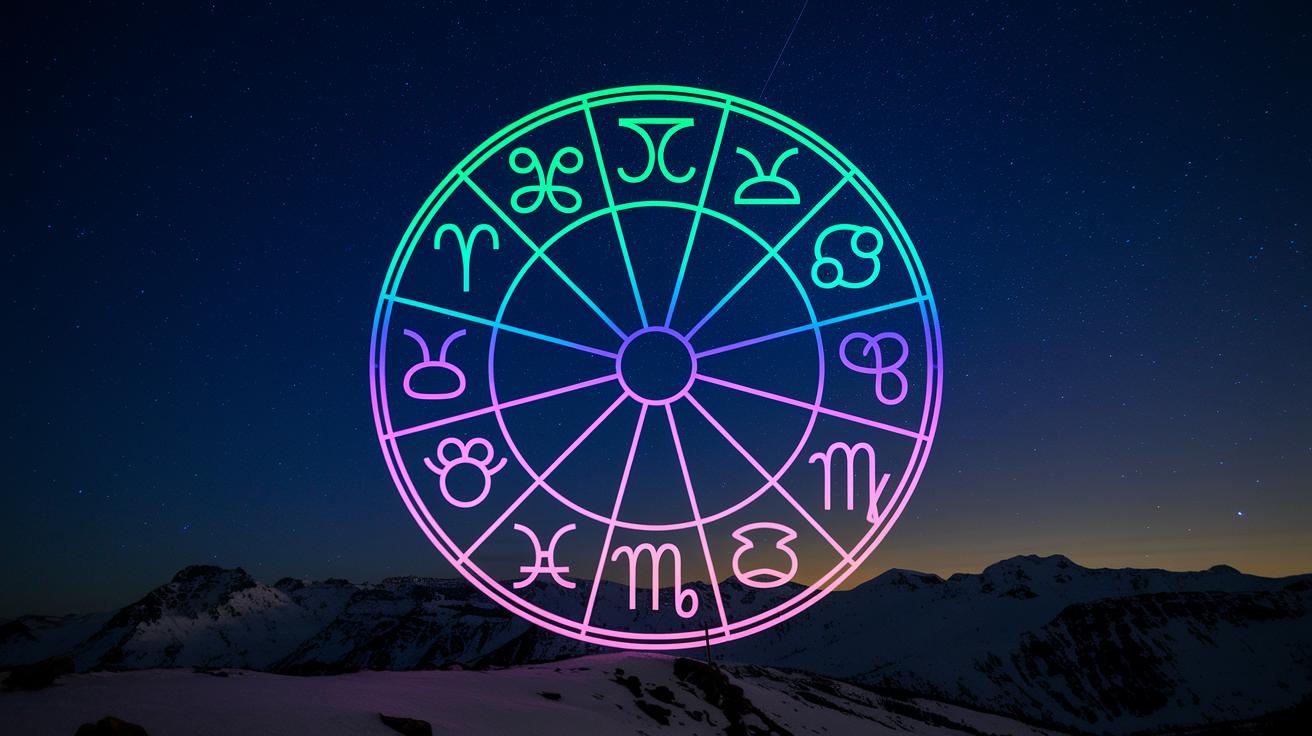

Ever wondered how one little word can change the way we see the stars? Back in ancient Greece, the word kosmos meant a world filled with order and beauty. Early storytellers painted a picture of life as if it were a neatly set table, where each piece glowed like a spark under a clear night sky.
As time went by, kosmos shifted a bit, but its old charm still helps us notice nature’s perfect design today. In this post, we’ll take a friendly journey from Homer's tales to the ideas of medieval scholars and see how that ancient meaning still lights up our modern view of life.
Tracing cosmic etymology to its Ancient Greek Roots
Homer's texts, written around the 8th century BCE, first used the word kosmos to mean order, ornament, and world. Picture ancient storytellers describing a universe arranged like a beautiful display, a simple idea that still fills us with wonder today.
Later on, classic thinkers gave kosmos a deeper meaning. Stoic philosophers, for example, saw it as the natural system that runs everything. They believed every part of nature fits together neatly, much like pieces of a puzzle, reminding us to notice the balance in our lives.
| Term | Language | Earliest Attestation | Meaning |
|---|---|---|---|
| Greek kosmos | Ancient Greek | 8th c. BCE | order, ornament, world |
| Latin cosmicus | Classical Latin | 1st c. AD | pertaining to the cosmos |
| Middle English cosmical | Middle English | 14th c. | universal |
This Greek root set the stage for how we talk about the universe today. As the idea of a well-ordered world moved through Latin texts and medieval writings, kosmos grew into a rich concept. The evolution from kosmos to cosmicus and then cosmical shows that the magic of a balanced universe still lights up our modern view of life.
Cosmic etymology in Roman and Medieval Scholarship

Back in the days of Cicero (around 1 BCE) and Pliny (around 1 AD), the Greek word kosmos gently morphed into cosmicus. This little shift captured an image of a well-ordered universe and celebrated the natural balance all around us. Latin authors used this term to talk about both the physical world we walk on and the divine creation high above.
As time moved on into the medieval era, thoughtful scholars like Boethius and Isidore of Seville started to play with cosmic language in a way that felt just right for their changing times. In the Carolingian period and later through the 12th century, monks lovingly added detailed glossary entries into their lesson plans. They wrote in careful manuscripts and included notes in their scripture and natural philosophy writings. These scholars recorded how ancient ideas fit into new Latin expressions. They saw the cosmos not only as a physical space but also as a sign of divine order, creating a bridge between old wisdom and fresh medieval thought. It reminds you of a conversation between science, faith, and language, each contributing its unique sparkle.
Later on, these cosmic terms found their way into Middle English manuscripts. The language slowly shifted and evolved until classical terms became part of everyday talk. This journey marks a beautiful blend of scholarly ideas making their way into common life, as if the stars themselves were guiding everyday conversation.
Mythological Currents in cosmic etymology
Greek creation myths, like those in Hesiod’s Theogony and the Orphic Hymns, show us a universe as a perfect, divine decoration. These old tales mix structure and beauty, just like the warm glow of dawn that fills you with wonder and hope.
Then there are the rich traditions from Mesopotamia and Egypt that add more color to our cosmic picture. In Mesopotamia, words like Sumerian an and Akkadian šamû described a sky that felt both real and mysteriously sacred. Egypt focused on keeping the stars in order, with gods who ruled day and night to remind us of nature's balance. As Barbara C. Sproul talks about in Primal Myths: Creation Myths Around the World, these ideas were more than just pretty words, they were the very building blocks of how people understood their world, echoing an ancient call for order in midst of chaos.
These age-old ideas about order still shine through in our everyday language. They remind us of a time when the universe was painted with sparkling stories as bright as the stars. Ever feel like the cosmos is gently guiding you with its timeless wisdom?
Cosmic etymology’s Semantic Evolution in Science and Philosophy

Kant’s well-known book, Critique of Judgment (1790), invites us to see the cosmos as a complete scene where order and beauty gently mingle. He made us wonder if the old, myth-filled language might still help us share the vast mystery of the universe.
By the 20th century, science started adding its own sparkle to the word cosmic. Terms like dark matter, the cosmic microwave background (a faint glow left over from the early universe), and cosmic inflation began to fill our skies with new meaning. Even in Spring 2005, some scientists asked if there was still room for a little myth in cosmology, feeling that a touch of poetic language could dance alongside strict scientific talk.
Today, cosmic carries both the magic of a starlit night and the sharp detail of scientific views. It captures that sense of wonder you feel when you look up at a clear sky, while also describing the precise measurements and discoveries of our universe.
Contemporary Language: cosmic etymology’s Modern Legacy
Today, cosmic words pop up everywhere. Ever noticed a term like cosmic latte? It first burst onto the scene in 2003 and made us picture a whole universe in a simple cup. Movies, fashion, and even tech gadgets now use this starlit language to hint at big ideas and gentle mystery. Marketers mix these words into brands to give off a modern, friendly vibe that transforms ordinary terms into symbols of boundless wonder.
Online, digital culture has caught the cosmic bug too. Social media posts often get a touch of stardust, turning everyday moments into little sparks of magic. Every scroll and click can feel like a secret encounter with the universe, inviting you to see the world with fresh, playful eyes.
Final Words
In the action, we traced cosmic etymology from its Ancient Greek roots through medieval language and scientific philosophy. We touched on how early Greek concepts evolved as they mingled with myth and later scientific ideas. Our exploration showed that the word “cosmic” now carries both poetic and technical meaning. Each stage has added layers to how we understand the universe. This rich mix of history and thought leaves us with a hopeful nod to the endless wonders written in the stars.
FAQ
Cosmic etymology Greek
The cosmic etymology in Greek comes from the word “kosmos,” used in ancient texts to describe order, beauty, and the world. This term laid the groundwork for modern ideas about the universe.
Cosmic etymology Latin
The cosmic etymology in Latin evolved from the Greek “kosmos,” appearing as “cosmicus” in classical writings. It carried the sense of order and the universe, linking ancient thought with later scholarly works.
Chaos etymology
The chaos etymology in Greek refers to a state of disorder or void, standing in contrast to “kosmos,” which signifies order. This difference helps highlight the balance between chaos and structured beauty.
Universe etymology
The universe etymology traces back to the Greek “kosmos.” It originally captured the idea of an ordered, complete world, a concept that has grown to encompass the entirety of our observable reality.
Cosmopolitan etymology
The cosmopolitan etymology is related to “cosmos” and originally meant worldly or universal. It evolved to describe someone or something that belongs to or represents the whole world.
Cosmic etymology pronunciation
The cosmic etymology pronunciation is generally uttered as “KAHZ-mik.” This pronunciation preserves its ancient roots while sounding modern and accessible in everyday language.
Cosmetic etymology
The cosmetic etymology derives from the Greek “kosmetikos,” which means related to adornment or beautification. It evolved separately from “cosmic” to refer to practices that enhance appearance.
Astro etymology
The astro etymology originates from the Greek word “astron,” meaning star. It now covers terms and ideas that relate to stars and celestial bodies, bridging poetic wonder with scientific study.
What is the root word of cosmic, and what is its original, literal etymological meaning?
The root word of cosmic is “kosmos,” which originally meant order, ornament, and world in ancient Greek texts. This literal meaning reflects the beautifully arranged structure of the universe.